DNA Paternity Test: Accuracy, Process, Types & What to Expect

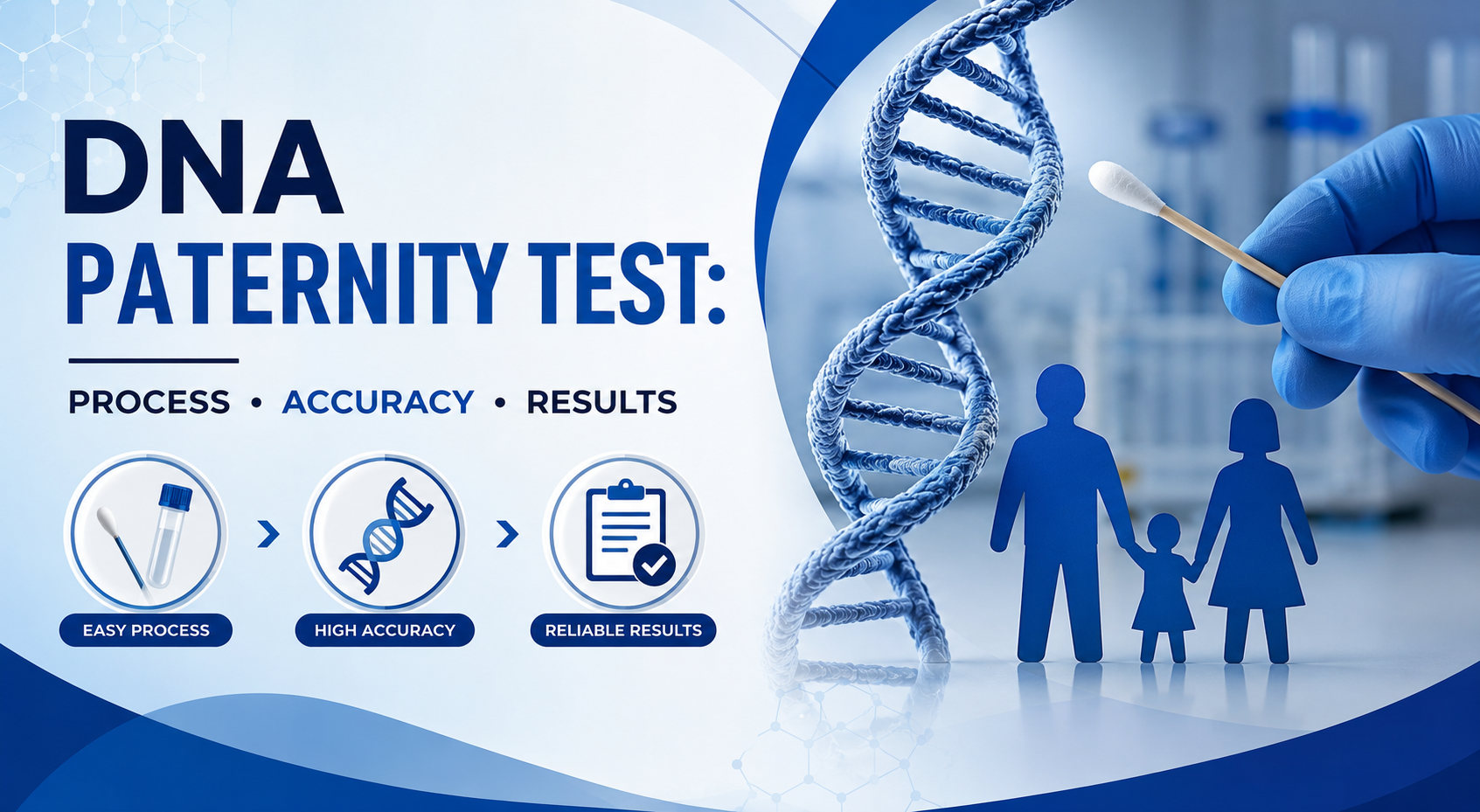
A DNA paternity test compares genetic markers called short tandem repeats (STRs) between a child and an alleged father to determine biological parentage. When paternity is confirmed, results are 99.99% or higher in accuracy; when it’s excluded, the result is 100% conclusive. The right type of test — legal, peace-of-mind, or prenatal — depends entirely on what you plan to do with the result.

What is a DNA paternity test?

A DNA paternity test is a genetic comparison that determines whether a man is the biological father of a child. Every child inherits one copy of each genetic marker from their mother and one from their biological father. Labs compare short tandem repeat (STR) markers — usually 16 to 20+ of them — between the child and the alleged father. If the markers match at nearly every location, paternity is confirmed with near-certainty. If several markers fail to match, paternity is excluded outright.

This isn’t a simple similarity comparison—it’s based on statistical analysis. Labs compute a Combined Paternity Index (CPI) from the matching markers and convert it into a probability of paternity, which is what appears on your final report.

Why people get a paternity test

There are four common reasons people request paternity testing:

  • Legal matters — child support, custody, visitation rights, or inheritance claims often require documented proof of paternity.
  • Immigration and citizenship — some visa and citizenship applications require proof of a biological parent-child relationship.
  • Medical history — knowing the correct biological family tree matters for assessing inherited health risks.
  • Personal clarity — many people simply want a definitive answer to move forward, whatever the outcome.

Whatever the reason, the process and science behind the test stay the same — what changes is which type of test you need, which we’ll cover next.

Just How Reliable Is a DNA Paternity Test 

This is the question almost everyone searching “DNA paternity test” actually wants answered, so here it is directly: when a man is the biological father, an accredited lab will typically report a probability of paternity of 99.99% or higher. If he is not the biological father, the report shows a complete, unambiguous exclusion — just two or three non-matching markers are enough to rule him out with full certainty. 

Several factors determine the reliability of a specific result:

  • Number of markers tested — more markers analyzed means a statistically stronger conclusion.
  • Lab accreditation — accredited facilities (look for ISO 17025 or equivalent certification) follow validated, peer-reviewed methodology.
  • Sample integrity — professionally collected, witnessed samples carry a lower risk of contamination or mix-up than self-collected ones.

In short: the science itself is extremely reliable. Where results can go wrong is almost always in sample handling, not the underlying test.

Legal vs. peace-of-mind vs. prenatal testing — which do you need?

Not every paternity test serves the same purpose, and choosing the wrong one can cost you time later if you need to redo it properly.

Peace-of-mind (non-legal) test samples are self-collected at home, usually with a cheek swab. It’s private, convenient, and gives you a scientifically accurate answer — but because there’s no independent witness confirming who provided the samples, it cannot be used in court, for government paperwork, or for immigration purposes.

Legal / chain-of-custody test A neutral, trained collector verifies photo ID, witnesses the sample collection, and documents a sealed chain of custody from collection to lab. This version is admissible for court proceedings, child support cases, custody matters, and immigration or citizenship applications.

Prenatal paternity test Can be performed during pregnancy either invasively (amniocentesis or CVS, done by a physician) or non-invasively (isolating fetal DNA from a maternal blood draw). This is typically used when legal or medical clarity is needed before the baby is born.

A simple rule to follow: if there’s any possibility the result will ever be used officially — in a court, embassy, or government office — start with the legal version. A peace-of-mind result cannot be converted into a legal one after the fact; you’d have to redo the entire test with proper chain-of-custody documentation.

How the test works, step by step guide

  1. Sample collection. A cheek (buccal) swab or an EDTA blood draw is taken from both the child and the alleged father. For legal tests, a certified, neutral collector oversees this step and verifies identity.
  2. Documentation (for legal tests). Photo ID, signed consent forms, and a tamper-evident, sealed sample kit accompany the samples to preserve their legal validity.
  3. DNA extraction and analysis. The lab extracts DNA from the samples and amplifies the STR markers using capillary electrophoresis, a well-established forensic genetics technique.
  4. Statistical comparison. The lab compares markers between the child and alleged father and calculates a Combined Paternity Index, which is then converted into a probability of paternity.
  5. Reporting. You receive a clear report stating either that paternity is “not excluded” (with a probability, typically 99.99%+) or “excluded” (0% match).

Consent is required at every stage — from the adult being tested, or from a child’s legal guardian if a minor is involved.

What affects turnaround time

Most standard paternity tests are processed within a few business days once the lab receives both samples, though the exact timeline depends on a few factors:

  • Sample type — cheek swabs are generally quicker to process than blood samples.
  • Test complexity — a straightforward two-person comparison is faster than a prenatal, siblingship, or motherless (father-and-child-only, without maternal DNA) test, which require additional statistical modeling.
  • Collection logistics — home collection versus in-clinic collection, and how quickly samples reach the lab, both affect the overall timeline.
  • Express processing — many labs offer expedited turnaround for time-sensitive legal or medical situations.

For an exact timeline based on your specific situation, it’s best to confirm directly with the lab handling your case, since processing capacity and test type both play a role.

At-home paternity test kits: what they can and can’t do

For those who simply want personal clarity, at-home kits remain a valid and reasonable choice. They’re private, simple to use, and give you scientifically accurate results using the same STR analysis methodology as legal tests.

Where they fall short: because samples are self-collected with no independent witness, the result cannot be used for court proceedings, child support determinations, custody cases, or immigration applications — no matter how accurate the underlying science is.

Common issues with self-collected samples:

  • Insufficient cheek cells collected on the swab
  • Cross-contamination between the two people’s samples
  • Missing signed consent when a minor is involved

If there’s even a small chance you’ll need the result for an official purpose down the line, it’s worth starting with a legal, chain-of-custody test rather than risking having to repeat the process later.

What to prepare before testing

A little preparation makes the process smoother, especially for legal tests:

  • Valid government-issued ID for every adult being tested
  • Birth certificate of the child, required for legal tests
  • Signed consent from the adult being tested, or from the child’s legal guardian
  • A clear understanding from your provider of their confidentiality policy and how results will be delivered
  • Emotional preparation — a paternity result can be significant for everyone involved, regardless of the outcome, so consider who you’d like present when you receive it

It’s worth noting that peace-of-mind and at-home tests are intended for personal information only, and this should be clearly understood by all parties before samples are collected — they are not a substitute for a legal, chain-of-custody test.

Understanding your results

Your report will state one of two outcomes:

  • Paternity not excluded — the alleged father’s markers match the children at nearly every location tested, with a probability of paternity typically reported at 99.99% or higher.
  • Paternity excluded — multiple markers fail to match, which conclusively rules out the alleged father as the biological parent, with 100% certainty.

If you’re unsure how to interpret a specific report, a good lab will walk you through exactly what the numbers mean before you leave with more questions than answers.

Frequently Asked Questions (FAQs)

Q1. How Accurate Is a DNA Paternity Test?

When performed at an accredited laboratory, a DNA paternity test provides a probability of paternity of 99.99% or higher when a match is confirmed and 100% exclusion when the alleged father is not the biological parent. The reliability of the result depends on the number of genetic markers analyzed and the quality of sample collection and handling.

Q2. What Do My Results Actually Mean?

Your report will show one of two outcomes: “Not Excluded”, meaning the alleged father is the biological parent with a probability of 99.99% or higher, or “Excluded”, meaning paternity is ruled out. A probability of 99.99%+ is the accepted scientific and legal standard for confirming paternity.

Q3. How Long Does It Take to Receive My Results?

Most standard DNA paternity test results are available within 3–7 business days after the laboratory receives all required samples. Many accredited labs also offer 24–48-hour express processing for urgent legal or medical cases.

Q4. Can an Ancestry DNA Test Be Used to Prove Paternity?

No. Ancestry DNA tests are designed to explore family origins and genetic relationships, not to establish legal paternity. Only a chain-of-custody paternity test conducted by an accredited laboratory is accepted for legal purposes.

Q5. What Determines the Cost of a DNA Paternity Test?

The cost depends on several factors, including whether you need a peace-of-mind or legal test, the number of participants, professional sample collection requirements, and any expedited processing requests.

Q6. Can Paternity Be Tested If the Father Isn’t Available?

Yes. If the alleged father cannot provide a sample, laboratories may compare DNA from close biological relatives, such as grandparents or siblings. While this approach can provide valuable evidence, it is generally less conclusive than direct father-child testing.

Q7. How Quickly Are Results Typically Delivered?

Standard processing usually takes 3–7 business days, while many laboratories offer express testing with results available within 24–48 hours for an additional fee.

Q8. Do I Need DNA Samples From Both the Child and the Alleged Father?

Yes. A direct paternity test requires DNA samples from both the child and the alleged father. Samples are typically collected using a painless cheek swab, allowing the laboratory to make a highly reliable genetic comparison.

Q9. How Early Can a Newborn Be Tested?

A newborn can be tested immediately after birth using a simple cheek swab. The procedure is safe, non-invasive, and suitable for infants of any age. In certain medical situations, other sample types may also be used.

Q10. Can DNA Testing Confirm a Sibling Relationship?

Yes. A siblingship DNA test compares shared genetic markers to determine whether two individuals are biologically related. Although it is not as conclusive as a direct paternity test, it can provide strong supporting evidence when the alleged father is unavailable.
A Recent IVF Case That Has Raised Important Questions

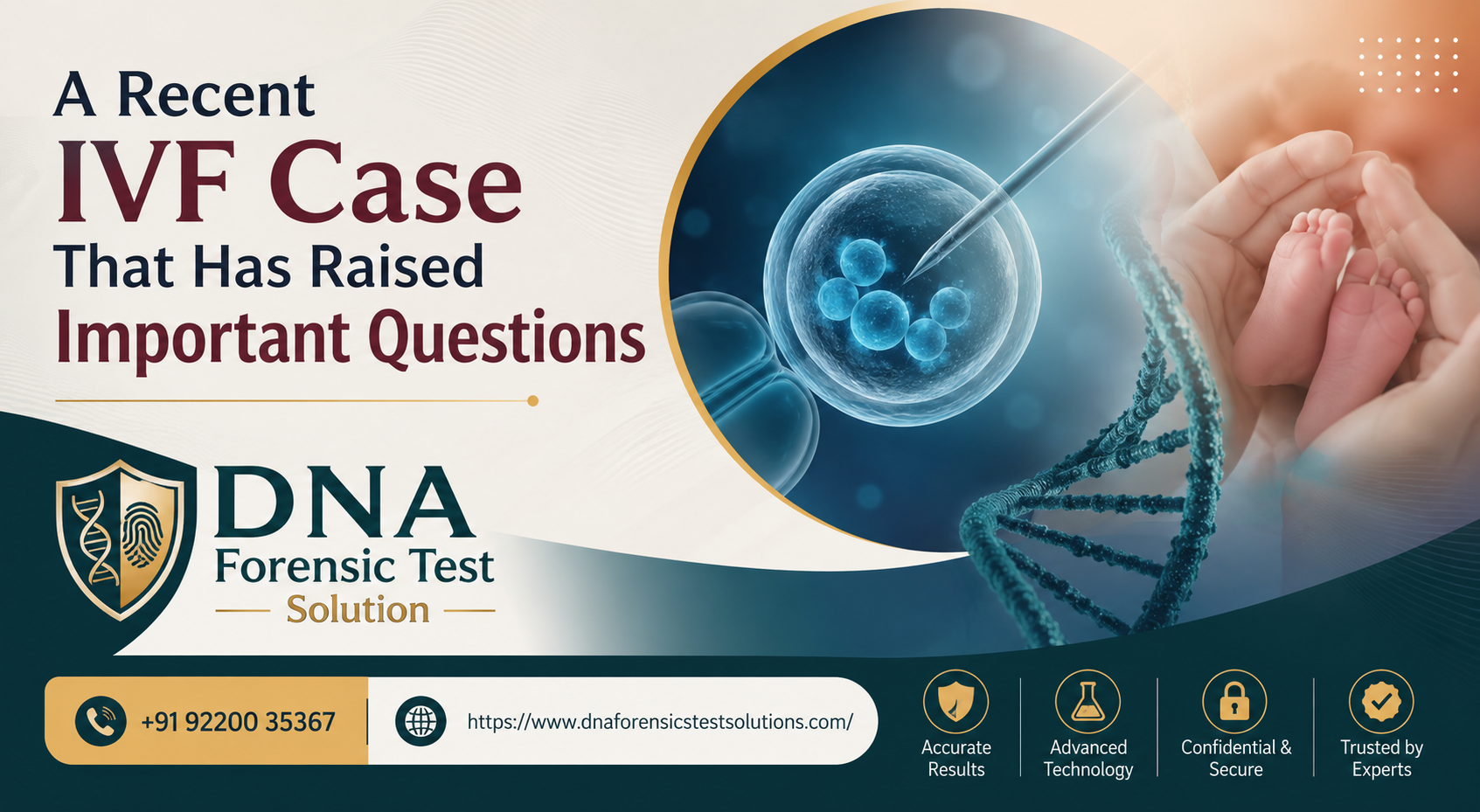
Gurugram IVF DNA Mix-Up Case. A recent case involving a couple from Gurugram has brought renewed attention to the importance of quality assurance in assisted reproductive treatments. According to media reports, the couple alleged that one of their twins born through IVF was not biologically related to either parent after DNA testing, leading to a police investigation into a possible embryo or baby mix-up. Authorities are currently investigating the matter, and no conclusions have yet been reached.

While such incidents are considered extremely rare, they remind us why strict laboratory protocols, traceability, and independent DNA verification play an essential role in modern fertility care.

How Does IVF Normally Ensure Safety?

Most reputable IVF centres follow stringent quality control procedures, including:

Unique patient identification systems

Barcode and witness verification during embryo handling

Secure cryostorage protocols

Multiple verification checkpoints before embryo transfer

Comprehensive documentation and record keeping

These safeguards are designed to minimize the possibility of human error.

Can DNA Testing Confirm Biological Parenthood?

Yes.

A DNA relationship test is the most reliable scientific method to confirm whether a child is biologically related to the intended parents.

By comparing inherited genetic markers, Best DNA test can accurately establish:

1. Biological paternity

2. Biological maternity

3. Parent-child relationships

Other biological relationships when required

This provides families with objective scientific confirmation of biological parentage.

When Should an IVF DNA Test Be Considered?

Although most IVF procedures are completed successfully without complications, DNA testing may be considered in situations such as:

Personal peace of mind after IVF treatment

Questions regarding embryo handling or transfer

Donor egg or donor sperm programmes (where appropriate)

Surrogacy arrangements

Court-directed or legal parentage verification

Medical or family record clarification

For many families, the test offers reassurance after years of emotional and financial investment in fertility treatment.

Why Chain of Custody Matters

If DNA testing is performed to support legal proceedings or official documentation, the sample collection process should follow a documented chain of custody.

This includes:

Identity verification

Signed consent forms

Secure sample collection

Tamper-evident packaging

Complete documentation from collection to laboratory

These procedures help preserve the integrity and admissibility of the results.

Choosing a Trusted DNA Testing Partner

Whether the purpose is reassurance or legal verification, families should choose a laboratory or testing provider that emphasizes:

Scientifically validated DNA testing methods

Strict chain-of-custody procedures

Confidential handling of personal information

Professional sample collection

Transparent reporting process

How DNA Forensics Test Solutions Can Help

At DNA Forensics Test Solutions, we understand that parenthood is built on trust, and scientific certainty can provide invaluable reassurance when questions arise.

We provide:

IVF DNA Paternity Testing

IVF DNA Maternity Testing

Relationship DNA Testing

Legal DNA Testing with documented chain of custody

Peace-of-Mind DNA Testing

Nationwide sample collection across India

Our experienced team follows standardized sample collection procedures and coordinates testing with accredited laboratory partners to deliver reliable and confidential DNA relationship testing services.

Final Thoughts

The recent Gurugram IVF case serves as a reminder that even though IVF technology has helped millions of families worldwide, maintaining rigorous quality standards and transparency remains essential.

DNA testing is not intended to create doubt—it is a scientific tool that can provide clarity, reassurance, and confidence when biological relationship verification is needed.

If you are seeking an IVF DNA Test, Paternity Test, Maternity Test, or Relationship DNA Test, DNA Forensics Test Solutions is committed to supporting you with professional sample collection, confidential service, and accurate genetic relationship testing.

Frequently Asked Questions. (FAQs)

Can a DNA test confirm whether an IVF baby is biologically related to both parents?

Yes. An IVF DNA test compares genetic markers between the child and the intended parents to scientifically confirm biological maternity, paternity, or both with a very high level of accuracy.

Is DNA testing recommended after every IVF pregnancy?

No. Most IVF treatments are completed successfully without any issues. DNA testing is generally chosen for personal reassurance, legal requirements, or when there are concerns about biological parentage.

What is the difference between a peace-of-mind IVF DNA test and a legal DNA test?

A peace-of-mind test is for personal information only, while a legal DNA test follows a documented chain of custody so the results may be used for court or official purposes.

How does chain of custody improve the reliability of a legal DNA test?

Chain of custody ensures verified identities, secure sample collection, proper documentation, and tamper-proof handling, helping maintain the integrity and legal acceptance of the DNA test results.

Can DNA testing be performed in cases involving donor eggs, donor sperm, or surrogacy?

Yes. Depending on the purpose of testing and the individuals involved, DNA relationship testing can help verify biological relationships in donor-assisted reproduction and surrogacy arrangements.

How long does it usually take to receive IVF DNA test results?

The turnaround time depends on the testing laboratory and the type of DNA analysis requested. Most relationship DNA tests are completed within a few working days after sample collection.

How should I choose a reliable provider for an IVF DNA test?

Choose a provider that follows standardized sample collection procedures, protects confidentiality, works with accredited laboratory partners, and offers transparent reporting with proper documentation for every test.

Home Office Approved UK Immigration DNA Test: Everything You Need to Know

Applying for a UK visa can be a complex process, especially when you need to prove a biological relationship with a family member. In certain immigration cases, documentary evidence such as birth certificates or family records may not be sufficient. In such situations, a Home Office approved UK Immigration DNA Test can provide scientific evidence to support your visa application.

At DNA Forensics Test Solutions, we facilitate secure, legally documented DNA sample collection across India and coordinate testing through internationally recognized partner laboratories, ensuring that the process meets the requirements for UK immigration applications.

What Is a UK Immigration DNA Test?

A UK Immigration DNA Test is a genetic relationship test used to establish a biological relationship between family members. The test is commonly used to support immigration applications when additional evidence of a claimed family relationship is requested.

The analysis compares DNA profiles from the applicant and the sponsoring family member using internationally accepted genetic markers. Results provide highly reliable evidence of biological relationships such as parent-child or sibling relationships.

What Does “Home Office Approved” Mean?

The UK Home Office does not approve individual DNA reports or require DNA testing for every immigration application. However, when DNA evidence is submitted, it should be obtained through laboratories that meet recognized quality standards and follow strict chain-of-custody procedures.

Using an accredited laboratory and a professionally documented sample collection process helps ensure that the DNA evidence is suitable for submission with your immigration application.

When Is a UK Immigration DNA Test Required?

DNA testing may be requested or voluntarily submitted in situations such as:

Family visa applications

Child visa applications

Parent-child relationship verification

Settlement or family reunion cases

Citizenship applications involving relationship verification

Cases where official documents are unavailable or inconclusive

It is important to note that DNA testing is generally used as supporting evidence and should only be undertaken when appropriate for your case.

Why Is Chain of Custody Important?

For immigration purposes, the credibility of the sample collection process is as important as the DNA analysis itself.

A proper chain-of-custody process includes:

Verification of the identity of each participant

Collection by an authorized sample collection professional

Photographic documentation (where required)

Tamper-evident packaging

Secure documentation and tracking

Direct shipment to the testing laboratory

These procedures help maintain the integrity and authenticity of the samples throughout the testing process.

Sample Collection Process

The DNA sample is typically collected using a simple, painless buccal (cheek) swab.

The process generally includes:

Appointment scheduling.

Identity verification using valid government-issued identification.

Buccal swab sample collection.

Completion of consent forms and chain-of-custody documentation.

Secure packaging and shipment to the testing laboratory.

DNA analysis and issuance of the final report.

The entire sample collection process usually takes only a few minutes.

Accuracy of UK Immigration DNA Testing

Modern DNA relationship testing uses advanced STR (Short Tandem Repeat) analysis to compare inherited genetic markers.

When performed under validated laboratory procedures, parentage testing provides extremely high confidence for confirming biological relationships and can definitively exclude an unrelated individual when applicable.

Why Choose DNA Forensics Test Solutions?

At DNA Forensics Test Solutions, we understand that immigration cases require accuracy, confidentiality, and strict documentation.

We provide:

Nationwide sample collection across India

Identity verification and chain-of-custody documentation

Coordination with internationally recognized testing laboratories

Secure sample handling and shipment

Professional support throughout the testing process

Dedicated assistance for UK immigration-related DNA testing

Our experienced team works closely with applicants to ensure that every step of the process is handled professionally and efficiently.

Frequently Asked Questions

Is a DNA test mandatory for a UK visa?

No. DNA testing is not mandatory for every UK visa application. It is generally used only when additional evidence of a biological relationship is required or when applicants choose to provide it in support of their case.

Can the DNA sample be collected in India?

Yes. Authorized sample collection can be arranged across India using documented chain-of-custody procedures before the samples are securely forwarded to the designated testing laboratory.

What sample is collected?

Most relationship DNA tests use a painless buccal (cheek) swab, making the process quick, safe, and non-invasive.

Is the report accepted for immigration purposes?

Reports from appropriately accredited laboratories that follow recognized chain-of-custody procedures are commonly used as supporting evidence for immigration applications. Applicants should always follow the specific guidance provided by the relevant immigration authority for their case.

Choose Confidence for Your Immigration Journey

Every immigration application represents an important milestone. Having reliable scientific evidence of your biological relationship can help strengthen your supporting documentation when relationship verification is required.

DNA Forensics Test Solutions is committed to delivering professional DNA sample collection services, secure documentation, and trusted support throughout your UK immigration DNA testing journey.

Best DNA Test in Punjab

A Punjab DNA Test provides an accurate genetic test which can be used to confirm/prove or disprove biological relationships as well as being used in legal cases, immigration and important questions people have about their personal backgrounds.

DNA Forensics Test Solutions is a professional DNA testing service that combines scientific expertise and modern laboratory technology with stringent confidentiality. With a dedicated team of experts, we make sure that every client gets expected results with unmatched testing support along the way.

Why DNA Testing Matters Today

DNA Test in Punjab can not only be used for the verification of relationships, it has other uses too. DNA tests are required for inheritance/paternity disputes, family legal documentation, identity proof and immigration. DNA analysis gives objective verification which assists an individual in taking a scientific-driven decision rather than being based on theoretical unawareness.

Improved access to genetic testing has led to an increasing number of people selecting to have their DNA analysed in order to provide clarity and reassurance with respect to important life events.

    Get a Free Consultation

    How the DNA Testing Process Works

    The procedure of a DNA Test in Punjab continues to be straight-forward, secure, and efficient. Pain-free cheek swab technology is used by our specialists to obtain DNA samples. This collection technique only requires a few minutes with no complicated medical procedures involved.

    Why Choose DNA Forensics Test Solutions

    Choosing the right testing provider is essential for generating accurate results. DNA Forensics Test Solutions is a combination of state of the art laboratory technology with customised customer care. DNA testing is a sensitive issue and we deal with every case with professionalism and confidentiality.

    Our emphasis is on providing business reports which are accurate, services which are provided in a timely manner and because of the very nature of our job – it can impact somebody’s life or livelihood – confidentiality is maintained all the way. Our experts are always ready to be there for your inquiry and provide guidance during the testing process.

    Benefits of Choosing Professional DNA Testing

    Benefits of DNA testing for accuracy This offers needed proof of biological connections, supports cases in custody disputes, and family conflict resolutions, along with being the main basis for governmental evidence. You can rely on professional testing for its accuracy, confidentiality, and scientific standards compliance as well.
    At DNA Forensics Test Solutions, we follow stringent Quality control at each and every step of the test. Being committed to accuracy builds the trust of clients towards the output that they receive.

    Our Fatherhood DNA examination not solely gives answers but elevated and trustworthy answers devoid of wasting time.

    Trusted DNA Testing Services Across Punjab

    Opting for a good service provider gives you the peace of mind when you require DNA Test in Punjab. DNA Forensics Test Solutions provides trusted DNA Testing Services for personal, legal & official use across the globe. Superior science and state-of-the-art technology deliver effective services that you can trust.
    As the finest DNA Test in Punjab, our skilled staff provide test assistance to obtain precise responses with secure, impartial, controlled testing services. We continue to raise awareness about trustworthy genetic insights available for free, anytime people need it.

    FREQUENTLY ASKED QUESTIONS

    The DNA Test in Punjab is mainly conducted for verifying specific biological relationships and are generally used in legal matters, immigration purposes as well as to verify the background of the person whom any one wants to know.

    Those people who are in the dispute of inheritance, custody cases, immigration documentation or verification with family require DNA testing services and many more factors.

    No, the test is easy and painless with a quick cheek swab that will get DNA without any medical complexity.

    Once tested in a laboratory for analysis, the results from most DNA tests are usually released within days or weeks.

    Yes, professional DNA testing providers ensure complete confidentiality of personal details, samples, and results throughout the process.

    DNA Test in Delhi

    A DNA test in Delhi can confirm biological relationships — such as paternity, maternity, or siblingship — through a simple cheek swab or blood sample, analyzed at an accredited lab, with your final report usually delivered within three to seven days.

    Families, legal professionals, and hospitals across Delhi NCR rely on DNA testing for a range of reasons: settling a paternity question privately, meeting a court’s evidence requirements, supporting an immigration case, or confirming a donor–recipient match before an organ transplant. Your exact purpose decides the collection method and report format required, so picking the correct test truly matters.

    DNA Forensics Test Solutions operates a certified testing facility in Anand Vihar, Delhi, with home sample collection available across the NCR, including Rohini, Dwarka, Vasant Kunj, and Karol Bagh.

    Why DNA Forensics Test Solutions Leads DNA Testing in Delhi

    Delhi labs offer paternity, maternity, siblingship, ancestry, prenatal, immigration, and organ transplant DNA tests.

    • Peace of Mind DNA Test — for personal clarity, no legal formalities required
    • Legal DNA Test — witnessed collection, used for court cases, custody, and immigration
    • Prenatal Paternity Test — determines paternity during pregnancy using a maternal blood sample
    • Siblingship / Avuncular Test — establishes biological relationship between siblings or aunt/uncle and child
    • Ancestry DNA Test — traces genetic ancestry and lineage
    • Organ Transplant Compatibility Test — confirms donor–recipient biological match before surgery
    • Infidelity DNA Test — analyzes personal items for private DNA comparison

    Each test uses the same core science — DNA extraction and STR marker comparison — but differs in how the sample is collected and documented, which is what determines whether the result is legally usable.

      Get a Free Consultation

      What Makes Our Delhi DNA Testing Lab Different?

      Many labs promise accuracy and confidentiality — but delivering on that promise consistently is a different matter. At DNA Forensics Test Solutions, every report leaving our Delhi facility is backed by internationally recognized accreditation, documented chain-of-custody procedures, and scientists who follow internationally accepted testing protocols from start to finish.

      Support doesn’t end once your sample is collected. Our genetic counselors — all trained healthcare professionals — walk you through your results in simple, clear language, so you know exactly what your report means and what your next step should be.

      Organ Transplant DNA Testing Made Easy in Delhi

      Need a DNA test for kidney or liver transplants in Delhi? Our certified testing services make the process simple, fast, and fully confidential. We help hospitals, clinics, and patients verify donor-recipient matches accurately, avoiding delays or complications.

      Whether the DNA test is for a court case, custody dispute, or an immigration application — DNA Forensics Test Solutions issues 100% court-admissible reports. We perform our legal DNA testing under strict chain-of-custody. This involves a certified individual collecting your sample, under documented conditions, with the final report signed by an accredited forensic geneticist. Our reports are admissible in courts across Delhi and India.

      How Is Your Sample Collected for a DNA Test in Delhi?

      The choice of sample collection is flexible, so you can select whichever one fits with your schedule and comfort level. You can visit our Delhi lab directly where trained staff will collect your samples right away, visit one of the partner collection centres across Delhi NCR for a closer location, choose doorstep collection wherein a certified professional visits your home or office for doing so, or simply place an order for a self-collection kit and send the sample back by courier at our lab. Whichever method you choose, accuracy and confidentiality remain fully protected, since all methods conform to strict hygiene and chain-of-custody standards.

      How Much Does a DNA Test Cost in Delhi?

      A DNA test in Delhi costs between ₹11,600 and ₹1,10,000, depending on the exact test required.

      Test Type

      Price

      What It’s For

      Paternity DNA Test

      ₹11,600

      Child & alleged father

      Maternity DNA Test

      ₹11,600

      Child & alleged mother

      Paternity Trio DNA Test

      ₹17,400

      Mother, child & alleged father together

      Ancestry DNA Test

      ₹15,000

      Genetic ancestry background

      Infidelity DNA Test

      ₹17,700

      Personal item DNA analysis

      Avuncular DNA Test

      ₹19,600

      Nephew/niece & uncle/aunt

      Grandparentage DNA Test

      ₹19,600

      Grandparent & child

      Siblingship DNA Test

      ₹19,600

      Two alleged siblings

      DNA Test for Immigration

      ₹25,000

      Visa/embassy legal cases

      Non-Invasive Prenatal Paternity Test

      ₹1,10,000

      During pregnancy, via maternal blood sample

      The final price also depends on how many people are tested, whether you choose home sample collection, and how fast you need the report. Ask for a written, itemized quote before booking so there are no surprises later.

      Is a DNA Test From Delhi Legally Valid in Court?

      Yes — a Legal DNA Test from an accredited Delhi lab is admissible in Indian courts and accepted for immigration cases abroad.

      What makes a test “legal” is not the science — it’s the process. A Legal DNA Test requires:

      • Photo ID verification of everyone tested
      • Sample collection witnessed by a neutral, trained professional
      • A documented chain of custody from collection to lab to report
      • A report signed by an accredited forensic geneticist

      A Peace of Mind test uses the same lab analysis but skips this documentation, which is why it’s faster and cheaper — but not usable in court. If there’s any chance you’ll need the result for a legal matter, choose the Legal DNA Test from the start; you can’t upgrade a Peace of Mind result after the fact.

      How Is the Sample Collected for a DNA Test in Delhi?

      You can visit the lab, use a nearby collection centre, or book home sample collection anywhere in Delhi NCR.

          1. Lab visit — sample collected directly at the Anand Vihar facility
          2. Partner collection centre — nearby options across Delhi NCR for convenience
          3. Home/doorstep collection — a certified professional visits your home or office
          4. Self-collection kit — order online, collect at home, courier the sample to the lab


      A cheek swab (buccal sample) is painless and takes under a minute — it’s safe for infants, elderly individuals, and anyone uncomfortable with a blood draw. Blood samples are used only for specific tests, such as prenatal paternity testing.

      Book your test today with DNA Forensics Test Solutions and get reliable results you can trust.

      FREQUENTLY ASKED QUESTIONS

      We offer Peace of Mind, Legal, Forensic, and Ancestry DNA tests — all conducted at our certified DNA Test Lab in Delhi.

      You can contact our helpline or order a home collection kit online. We’ll handle the rest.
      The cost varies depending on the test type and purpose. Contact us for a transparent quote.
      Yes, our Legal DNA Tests follow approved procedures and are valid for court or immigration purposes.

      Absolutely. We provide PAN India home sample collection, including in Bihar, Surat, Vadodara, Lucknow, and other cities.

      Yes. A paternity DNA test can be conducted with just the alleged father and child — the mother’s sample is not mandatory, though including her can increase the accuracy of the result. Maternity or other relatives can be added if needed for stronger conclusiveness.

      A Peace of Mind DNA test can be done discreetly for personal knowledge if you’re able to provide a valid sample. However, results from such a test are not legally/court-admissible. For any court case, custody matter, or immigration application, a witnessed Legal DNA Test — where all parties are identified and sampled together — is required.

      DNA Testing After IVF Birth: Ensuring Certainty with DNA Forensics Test Solutions

      DNA Testing

      DNA Testing After IVF Birth is an essential step in certain cases to ensure complete certainty of biological relationships. Advancements in assisted reproductive technologies, particularly In Vitro Fertilization (IVF), have transformed the journey to parenthood. While IVF is a highly controlled and precise process, certain situations still require postnatal DNA testing to confirm parentage with full accuracy and peace of mind.

      At DNA Forensics Test Solutions, we understand the sensitivity and importance of such cases. Our specialized DNA testing services are designed to provide accurate, confidential, and legally reliable results, helping families move forward with confidence.

      Understanding Postnatal DNA Testing in IVF Cases

      Postnatal DNA testing involves analyzing genetic material after the birth of the child to confirm biological parentage. This is especially relevant in IVF scenarios involving:

      · Donor sperm or donor eggs

      · Surrogacy arrangements

      · Multiple embryo transfers

      · Legal or immigration requirements

      Using advanced genetic techniques, we compare the DNA profiles of the child and alleged parent(s) to establish biological relationships with high accuracy.

      Why Choose DNA Testing After IVF Birth?

      DNA testing after IVF birth is important for ensuring complete certainty and peace of mind for parents. Although IVF procedures are highly accurate and carefully managed, rare possibilities such as sample mix-ups or lab errors may occur. DNA testing helps confirm biological parentage with scientific precision, eliminating any doubts. It is especially useful in legal matters, medical history verification, or personal reassurance. This testing also strengthens trust and transparency in the reproductive process. With advanced forensic techniques, results are highly reliable, making DNA testing a safe and dependable choice for families seeking clarity after IVF birth.

      1. Confirm Biological Parentage

      Even in well-managed IVF procedures, DNA testing provides scientific confirmation of parent-child relationships.

      2. Support Legal Requirements

      DNA reports may be required for:

      · Birth registration

      · Custody or legal documentation

      · Immigration and visa processes

      3. Ensure Transparency in Donor Cases

      In donor-assisted IVF, DNA testing helps clarify genetic relationships for legal or personal reasons.

      4. Peace of Mind for Families

      For many families, DNA testing offers reassurance and confidence in the IVF process.

      How DNA Forensics Test Solutions Conducts Testing

      At DNA Forensics Test Solutions, we follow a rigorous and standardized approach to ensure accuracy and reliability:

      ✔ Sample Collection

      · Buccal swab or blood sample collection

      · Identity verification with valid ID

      · Proper consent documentation

      ✔ Laboratory Analysis

      · DNA extraction under controlled conditions

      · STR (Short Tandem Repeat) profiling using validated methods

      ✔ Result Interpretation

      · Scientific comparison of genetic markers

      · Clear and precise reporting

      ✔ Report Delivery

      · Confidential and secure report issuance

      · Suitable for legal and official use

      Accuracy You Can Trust

      Our DNA testing services offer:

      · >99.99% probability of inclusion in parentage cases

      · Near 100% certainty in exclusion cases

      · Use of internationally accepted STR analysis standards

      Legal DNA Testing & Chain of Custody

      For IVF-related cases requiring legal validity, we ensure:

      · Strict chain-of-custody procedures

      · Verified identity documentation

      · Tamper-proof sample handling

      This ensures that reports generated by DNA Forensics Test Solutions are legally defensible and acceptable for official purposes.

      DNA Testing After IVF Birth, accuracy is not just a claim—it is our commitment.

      Privacy & Confidentiality

      We recognize that DNA Testing After IVF Birth testing involves sensitive personal information.

      Our commitment includes:

      · Secure sample handling

      · Confidential data storage

      · Controlled access to results

      At every step, your privacy remains protected.

      Why DNA Forensics Test Solutions?

      ✔ Expertise in IVF and parentage DNA testing ✔ High-precision laboratory processes ✔ Legally compliant reporting ✔ End-to-end client support ✔ Trusted by families and professionals

      We combine scientific excellence with compassionate service, ensuring that every case is handled with care and professionalism.

      Conclusion:

      Paternity and maternity DNA testing after IVF birth plays a vital role in ensuring clarity, trust, and legal certainty. Whether required for documentation, reassurance, or compliance, it provides a reliable and scientifically validated solution.

      With DNA Forensics Test Solutions, you gain more than just a test—you gain confidence, accuracy, and peace of mind.

      Discover Your Roots with the Most Advanced GPS Ancestry DNA Test in India

      Have you ever wondered where your ancestors came from or wanted to trace your unique genetic heritage? The latest breakthrough in genetic science, the GPS Ancestry DNA Test, makes it possible to uncover your ancestral origins with unmatched accuracy. At DNA Forensics Test Solutions, we bring you the most advanced ancestry DNA testing services in India, powered by cutting-edge technology and global research.

      What is a GPS Ancestry DNA Test?

      The GPS (Geographic Population Structure) Ancestry DNA Test is an advanced form of DNA analysis that pinpoints your genetic roots with exceptional precision. Unlike basic ancestry tests, which only provide broad continental information, the GPS DNA test traces your ancestral origin to a specific town, village, or region.

      • High-Resolution Results – Identifies your ancestral location within 50–100 kilometers.
      • Global Population Database – Compares your DNA against thousands of reference populations worldwide.
      • Detailed Ancestry Report – Provides insights into your ethnic mix, migration patterns, and ancestral history.
      • Best For: Individuals curious about their family history, heritage, and cultural identity.

      Benefits of GPS Ancestry DNA Testing

      1. Unmatched Accuracy – Goes beyond traditional ancestry DNA tests by pinpointing exact locations of origin.
      2. Comprehensive Heritage Analysis – Discover your ethnic composition, migration patterns, and cultural lineage.
      3. Connect with Your Roots – Ideal for people looking to reconnect with their ancestral homeland.
      4. Personalized Experience – Results are easy to understand and provide a meaningful story about your ancestry.
      5. Global Relevance – Whether your roots are in India, Europe, Africa, or beyond, the GPS test offers worldwide coverage.

      GPS Ancestry DNA Test in India – How It Works

      At DNA Forensics Test Solutions, we make the process simple, accurate, and confidential:

      1. Sample Collection – A painless buccal swab is collected at one of our nationwide centers or delivered as a home collection kit.
      2. Laboratory Analysis – Your DNA is analyzed using advanced GPS technology and compared against an extensive global database.
      3. Detailed Report – You receive a comprehensive ancestry report with maps, migration history, and regional insights.
      4. Expert Guidance – Our genetic experts help interpret your results for a deeper understanding of your heritage.

      Why Choose DNA Forensics Test Solutions?

      India’s Leading DNA Testing Provider – Trusted for accuracy, confidentiality, and professionalism.
      Cutting-Edge Technology – Powered by the most advanced GPS Ancestry DNA testing methods.
      Global Database Access – Wider comparison for more precise results.
      Expert Consultation – Personalized support to help you explore your ancestral journey.
      Pan-India Network – Convenient collection centers and home sample collection services.

      Your DNA holds the story of your ancestors, and with the GPS Ancestry DNA Test, you can finally uncover it with extraordinary detail. Whether you are looking to connect with your roots, learn more about your heritage, or simply satisfy your curiosity, DNA Forensics Test Solutions offers the most advanced ancestry testing services in India.

      Contact us today to learn more about the ancestry DNA test cost in India and begin your journey into the past with the most advanced GPS Ancestry DNA Test.

      Home

      About Us

      Advanced DNA Tests in India and Forensic Solutions

      DNA Forensics Test Solutions Pvt. Ltd. is a leading name in accredited and reliable DNA testing services across India. We offer a complete range of tests including paternity, maternity, siblingship, ancestry, non-invasive prenatal, immigration, organ transplant, and legal DNA testing — all performed under strict quality control for scientifically accurate results.

      If you’re considering a DNA test in India, our team makes the process simple — with doorstep sample collection, expert guidance, and trusted results.

      Our ISO-certified laboratories guarantee 100% accuracy, confidentiality, and legally valid reports.

      DNA forensic test service in delhi
      best dna forensic test service in delhi

      Why Choose Us

      dna test solution in delhi

      Accurate & Reliable Results: Every DNA test in India we conduct runs on advanced technology and strict international standards, producing DNA test results you can rely on.

      dna forensic research lab in delhi

      Court-Admissible Legal Tests: Our DNA testing lab in India maintains strict chain-of-custody protocols. That means legal DNA test results valid in Indian courts, no questions asked.

      dna forensic test lab

      Wide Service Network: From metros to small towns, our DNA test labs in India extend sample collection and support across India and even abroad.

      dna forensic research center in delhi

      International Approvals: Immigration DNA testing in India that embassies trust. USA, UK, Canada, Australia — our reports cross borders without resistance.

      Call now